
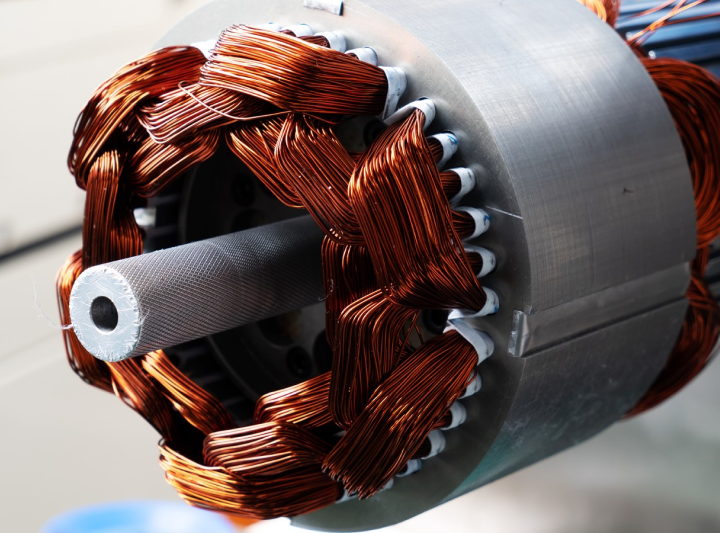
Signs your three phase motor needs rewinding
A three phase motor rarely fails without warning first. Watch for these signs.
- The motor runs noticeably hotter than usual during normal operation.
- You notice a burning smell coming from the motor housing.
- The motor trips its breaker or overload relay more often than it used to.
- There is a drop in torque or the motor struggles to start under load.
- You can see scorch marks or discolouration on the windings during inspection.
- The motor hums loudly or vibrates more than it did when new.
If you notice any of these signs, it is worth having the motor assessed before it fails completely, since a full failure often costs more to repair than an early rewind.
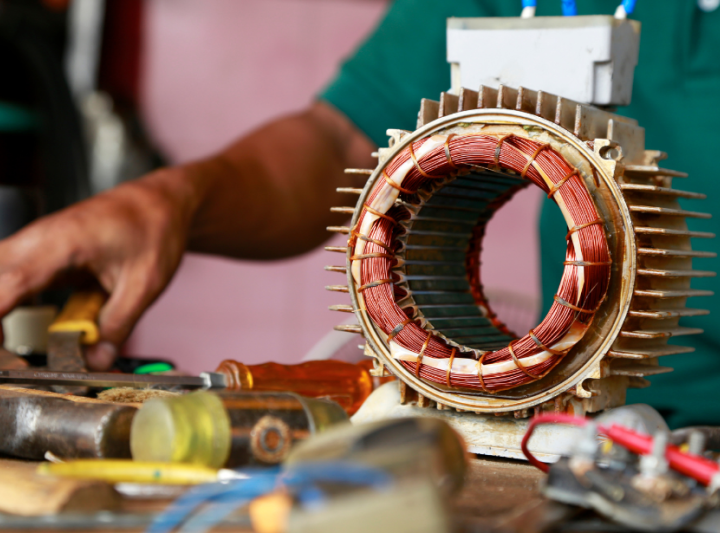
How a three phase motor works and why the windings fail
A three phase motor uses three separate winding sets in the stator, spaced apart so that the incoming three phase power creates a rotating magnetic field. This rotating field induces current in the rotor bars, which in turn creates the rotor's own magnetic field, and it is the interaction between these two fields that produces rotation. Because the design relies purely on this rotating field rather than any switching components, three phase motors do not use start or run capacitors at all. That detail matters because it means winding failure is almost always the actual cause of a fault, not a capacitor problem.
Windings usually fail for one of a few reasons. Insulation breaks down over time from heat cycling, especially in motors that run continuously or are regularly overloaded. Moisture or contaminants can get into the stator in wash down environments or dusty industrial sites, which slowly degrades the insulation coating on the copper wire. Voltage spikes, phase imbalance, or a site with unstable power can also stress the windings faster than normal wear would. Once the insulation breaks down enough, the winding shorts either to the frame or to itself, and the motor either trips out or burns.
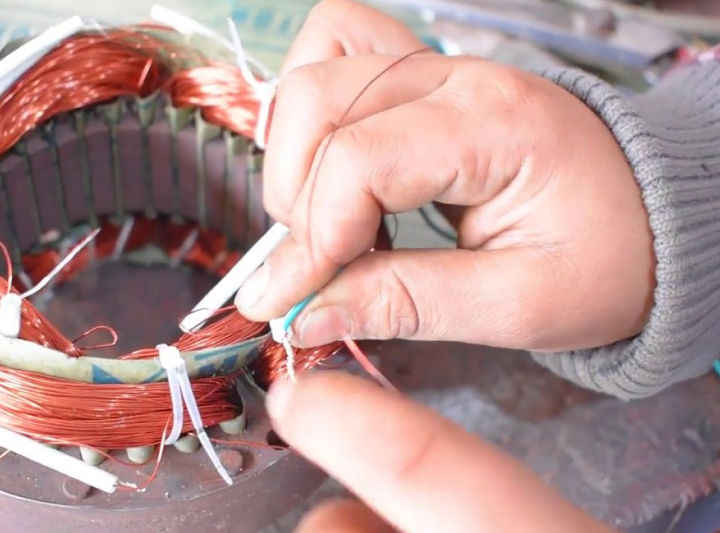
What rewinding a three phase motor actually involves
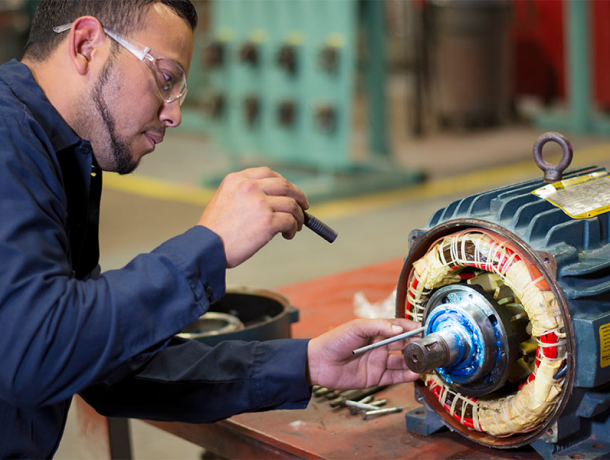
Rewinding starts with fully stripping the old windings out of the stator, which is usually done by carefully burning off the old insulation in a controlled oven, then mechanically removing the burnt copper. The stator core is then cleaned and tested to confirm there is no damage to the laminations themselves, since damaged laminations reduce efficiency even with new windings installed.
New copper wire is wound to match the original winding specification, meaning the same number of turns, the same wire gauge, and the same coil pitch as the original design. This step matters because getting the winding specification wrong changes the motor's speed, torque, or current draw. The new windings are then insulated, connected according to the correct three phase configuration, and the whole stator is dipped or vacuum impregnated with insulating varnish and baked to lock everything in place.
Once cured, the motor is reassembled with the rotor, bearings, and end shields, then run tested under load to confirm current draw, temperature, and vibration are all within normal range before it goes back to your site.
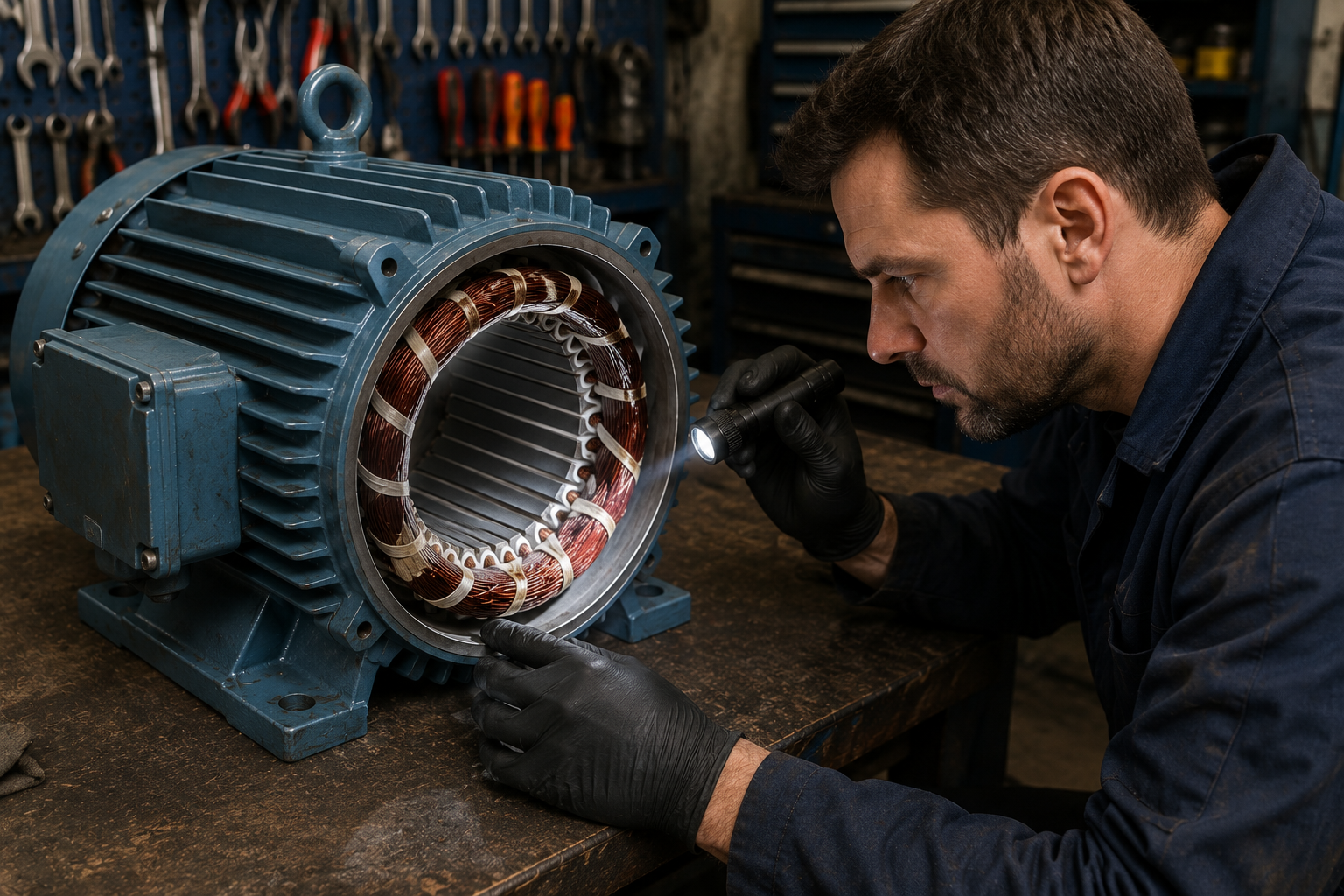
Our rewinding and repair process
We keep the process straightforward so you know what is happening with your motor at every stage.
- Initial inspection and diagnosis to confirm rewinding is the right fix.
- Full strip down and testing of the stator and rotor.
- Rewinding to original manufacturer specification.
- Insulation testing and varnish curing.
- Reassembly and full load testing before dispatch.
- Delivery or pickup coordination to suit your schedule.
Frequently Asked
Questions
How long does it take to rewind a three phase motor?
Turnaround depends on motor size and current workload, but most standard industrial three phase motors are completed within a few working days. Contact us for a current estimate based on your motor.
Is it better to rewind or replace a three phase motor?
It depends on the age and condition of the motor, the cost of a comparable new unit, and how critical the motor is to your operation. We will give you a straight answer after inspecting the motor rather than pushing one option by default.
Can you rewind a three phase motor of any size?
We handle a wide range of sizes commonly used in Auckland industrial and commercial settings. Contact us with the nameplate details and we will confirm we can take on the job.
Do you test the motor after rewinding?
Yes, every motor is run tested under load before it leaves our workshop, checking current draw, temperature, and vibration.
Your Local Auckland Based Motor Rewinder
When rewinding an electric motor, it is important to find a reliable service provider in order to ensure proper maintenance and repair of the equipment. A reliable service provider will have experience in the field, offering quality workmanship and specialized services.
They should also be licensed and certified, so customers have the assurance that they are dealing with a professional who meets industry standards. Finding a reliable service provider can help prevent damage or loss of equipment, saving time and money in the long run.
We proudly serve Auckland and the surrounding regions, including North Shore, East Auckland, West Auckland, South Auckland and Central Auckland.