
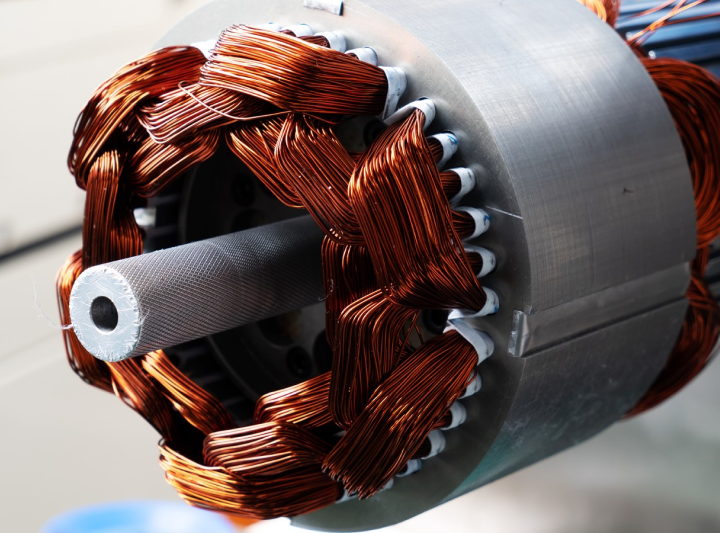
Signs your synchronous motor needs rewinding
- The motor loses synchronisation with the supply frequency under load.
- It runs noticeably hotter than usual during normal operation.
- There is a burning smell or visible scorching on the windings.
- The motor draws higher current than its rated specification.
- You notice unusual noise or vibration during operation.
- The motor trips protection devices more often than it used to.
Since synchronous motors depend on maintaining a fixed relationship between rotor speed and supply frequency, any loss of that synchronisation is worth investigating promptly, since it places extra stress on the windings.
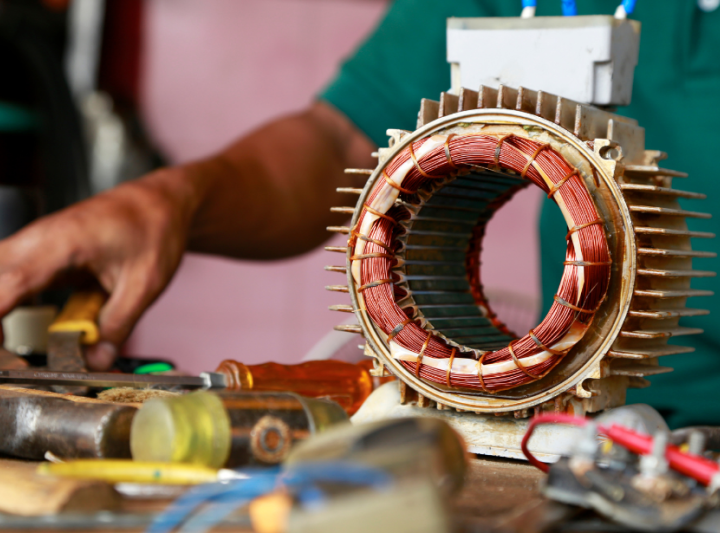
How a synchronous motor works and why the windings fail
A synchronous motor runs at a constant speed that is locked to the frequency of the supply, rather than slipping slightly below synchronous speed the way an induction motor does. This is achieved either through a rotor with permanent magnets, a wound rotor supplied with direct current, or in smaller designs, a reluctance rotor that aligns itself with the rotating stator field. Because the rotor turns in step with the field rather than needing to develop slip to generate torque, synchronous motors are valued for applications where precise, constant speed matters.
Winding failure in synchronous motors follows the same general pattern as other motor types, insulation breakdown from sustained heat, contamination from the operating environment, and mechanical stress over years of continuous operation. Because these motors are often used in demanding continuous duty applications, winding stress from thermal cycling tends to be a more significant factor than in motors that start and stop frequently.
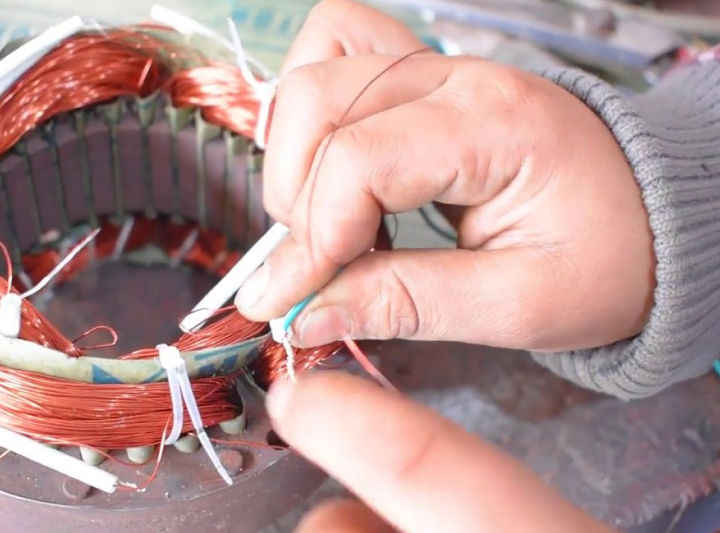
What rewinding a synchronous motor actually involves
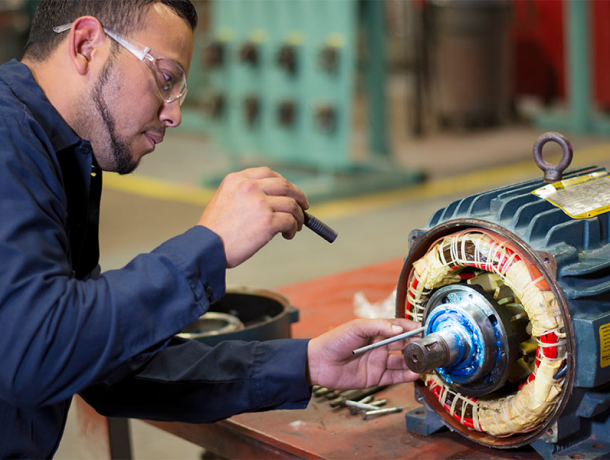
The stator is stripped of its existing windings and the laminations are checked for damage before any new winding work begins. New wire is wound to the original specification, matching the winding pattern needed to maintain correct synchronous operation with the rotor design fitted to that particular motor.
The stator is then insulated, dipped or impregnated with varnish, and cured to seal the windings. Where the motor uses a wound rotor with a separate direct current supply, we also check the rotor winding and slip ring assembly, since faults here can affect synchronisation even after the stator has been rewound correctly.
Once reassembled, the motor is run tested to confirm it reaches and maintains synchronous speed correctly under load, with current draw and temperature within expected range.
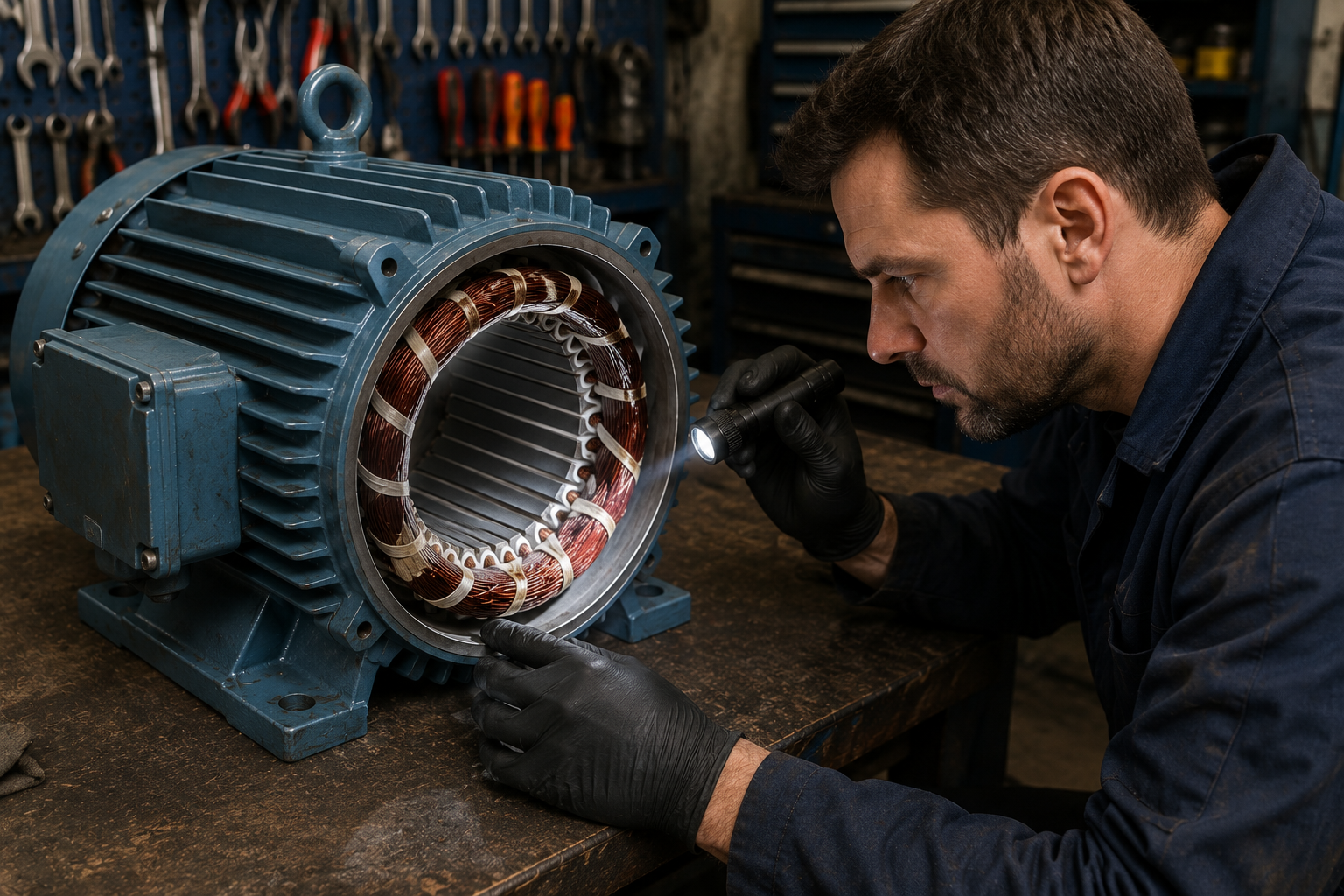
Our rewinding and repair process
- Initial inspection of stator windings and rotor condition.
- Full strip down and testing of the stator core.
- Rewinding to the original manufacturer specification.
- Insulation testing and varnish curing.
- Reassembly and full load testing, confirming synchronous operation.
- Delivery or pickup coordination to suit your schedule.
Frequently Asked
Questions
Why is my synchronous motor losing synchronisation?
This can be caused by winding faults, rotor issues, or supply problems. We check all of these during inspection rather than assuming the windings are the only cause.
Do you work on synchronous motors with wound rotors and slip rings?
Yes, we inspect the rotor winding and slip ring assembly where fitted, since faults here can affect performance even after the stator has been rewound.
How long does a synchronous motor rewind take?
Turnaround depends on motor size and complexity. Contact us for a current estimate based on your specific motor.
Can a synchronous motor be repaired without a full rewind?
In some cases, yes, if the fault is limited to a specific component rather than the windings themselves. We will confirm this during inspection before recommending a full rewind.
Your Local Auckland Based Motor Rewinder
When rewinding an electric motor, it is important to find a reliable service provider in order to ensure proper maintenance and repair of the equipment. A reliable service provider will have experience in the field, offering quality workmanship and specialized services.
They should also be licensed and certified, so customers have the assurance that they are dealing with a professional who meets industry standards. Finding a reliable service provider can help prevent damage or loss of equipment, saving time and money in the long run.
We proudly serve Auckland and the surrounding regions, including North Shore, East Auckland, West Auckland, South Auckland and Central Auckland.