
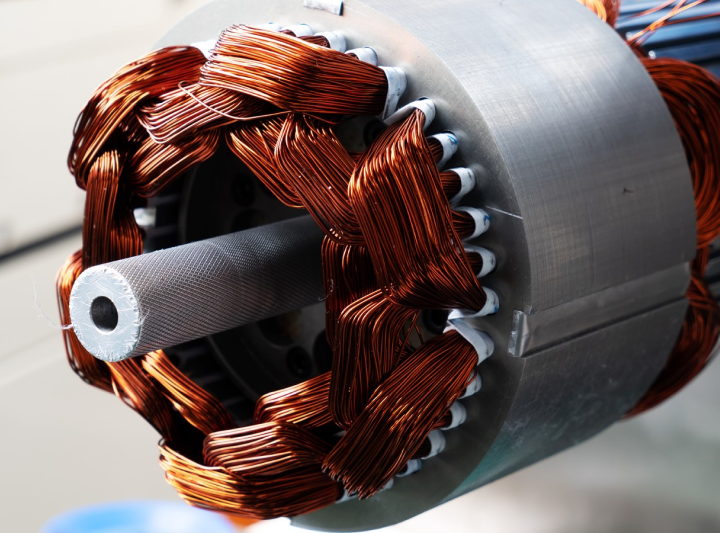
Signs your stepper motor needs rewinding
- The motor loses steps or does not reach the correct position accurately.
- It runs hotter than usual during normal operation.
- There is a burning smell or visible discolouration on the windings.
- You hear unusual noise or notice rougher than normal motion between steps.
- The motor draws higher current than its rated specification for a given load.
- The driver reports a fault or the motor stalls unexpectedly.
Because stepper motors work closely with a driver that controls the step sequence, it is worth confirming the driver is functioning correctly before assuming the fault is in the windings.
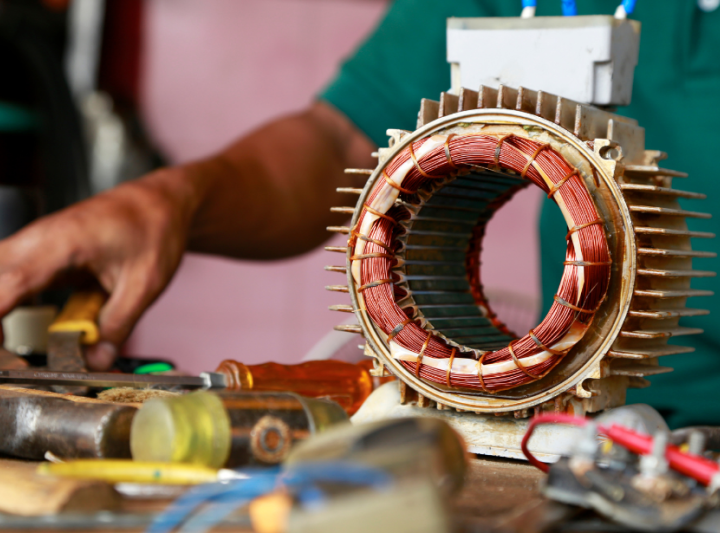
How a stepper motor works and why the windings fail
A stepper motor moves in fixed increments rather than turning continuously, with each step created by energising specific winding phases in the stator in a set sequence controlled by an external driver. The rotor, often built with many small teeth or permanent magnets depending on the design, aligns itself with each energised phase, which is what allows the motor to move to precise, repeatable positions rather than free spinning.
Winding failure in stepper motors is generally caused by the same underlying issues as other motor types, insulation breakdown from sustained heat, contamination from dust in industrial or workshop environments, or mechanical stress on winding connections from continuous start stop operation. Because stepper motors are often run in applications with frequent direction changes and rapid stepping, thermal cycling tends to be a significant contributor to winding wear over time. A faulty driver sending incorrect current to a winding phase can also overload that specific winding and accelerate failure.
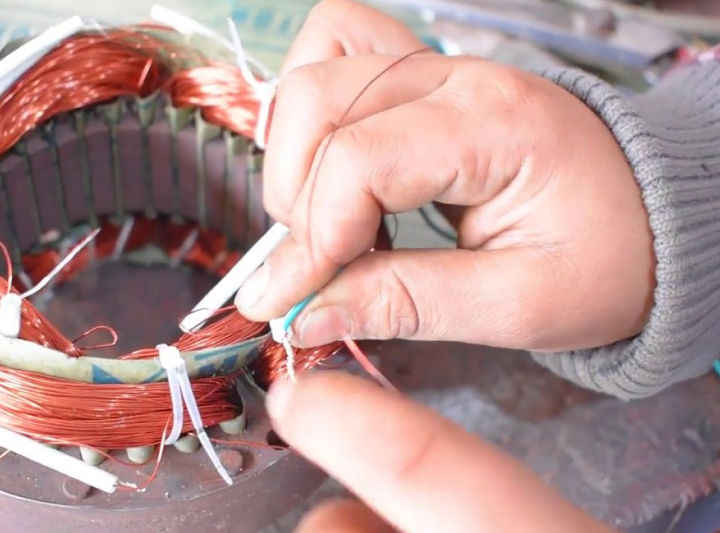
What rewinding a stepper motor actually involves
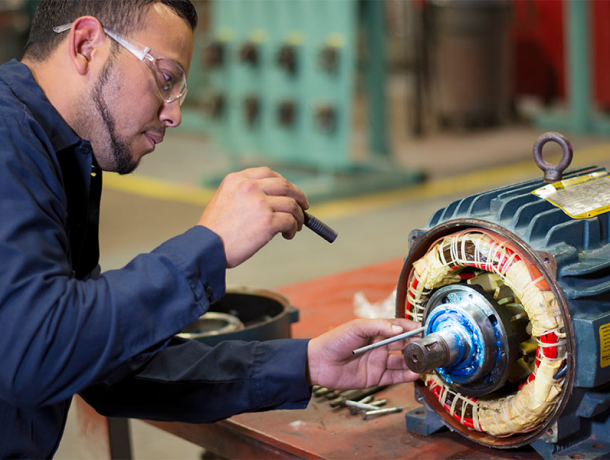
The stator is carefully removed and stripped of its existing windings, then checked for lamination damage before rewinding begins. Because stepper motors are wound in multiple phases with a specific step angle designed to work precisely with the driver's sequencing, the rewind has to reproduce the original phase pattern and turns count accurately, since even small deviations can affect step accuracy and torque.
New wire is wound to the original specification, insulated, and the stator is then dipped or impregnated with varnish and cured to seal the windings in place. Once reassembled, the motor is tested with a compatible driver to confirm accurate stepping, correct current draw for each phase, and stable operation across its speed range before it is returned.
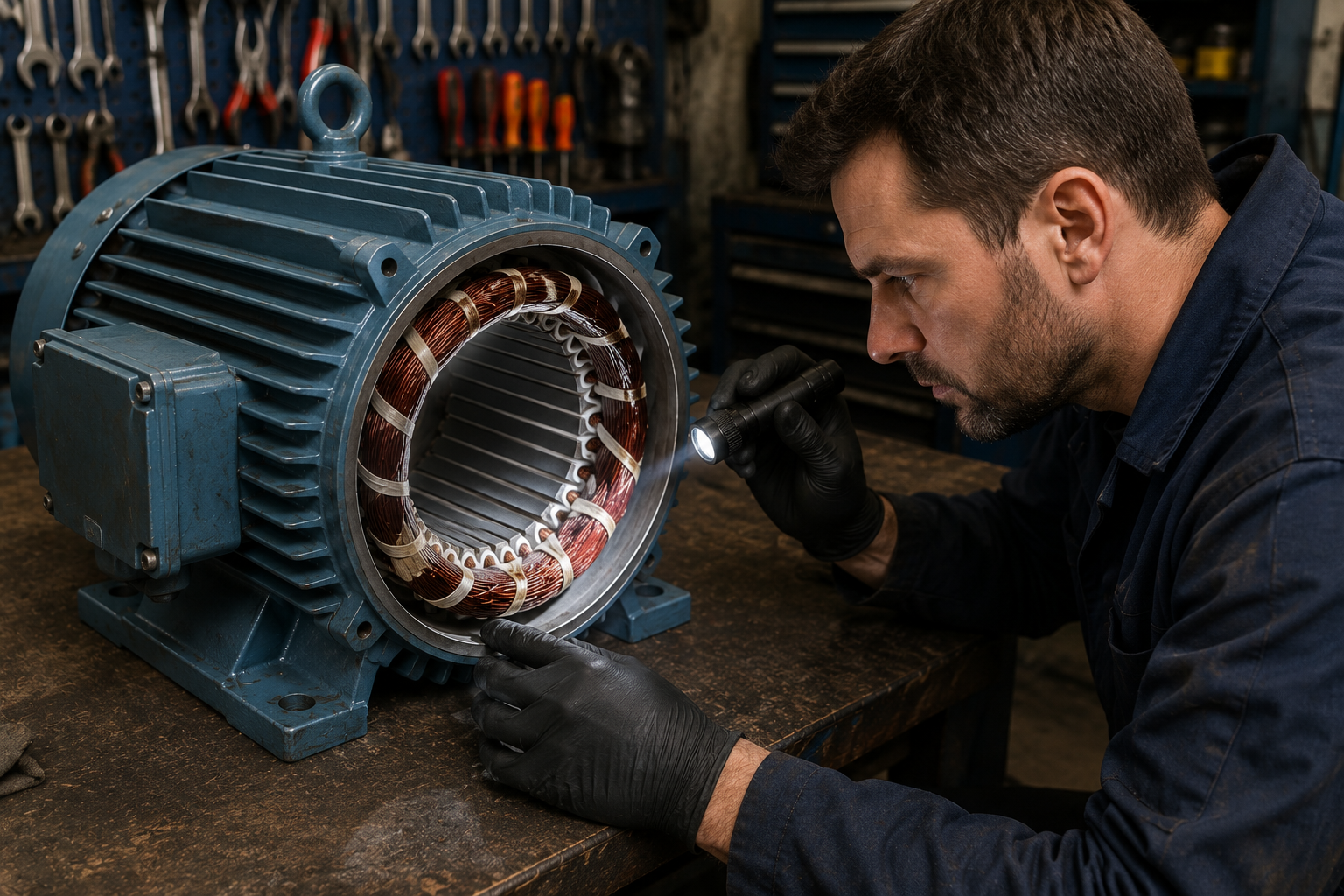
Our rewinding and repair process
- Initial diagnosis of windings, driver behaviour, and step accuracy.
- Full strip down and inspection of the stator core.
- Rewinding to the original phase pattern and specification.
- Insulation testing and varnish curing.
Reassembly and testing with a compatible driver. - Delivery or pickup coordination to suit your schedule.
Frequently Asked
Questions
Why is my stepper motor losing steps?
This can be caused by winding faults, driver issues, or the motor being pushed beyond its torque capacity for the application. We check all of these during assessment.
Do you test the motor with a driver after rewinding?
Yes, every stepper motor is tested with a compatible driver to confirm accurate stepping and correct current draw before it is returned.
How long does a stepper motor rewind take?
Turnaround depends on motor size and winding complexity. Contact us for a current estimate based on your specific motor.
Can a small precision stepper motor be rewound?
Yes, though very small motors require careful precision work to reproduce the exact phase pattern. Contact us with the motor details and we will confirm we can take on the job.
Your Local Auckland Based Motor Rewinder
When rewinding an electric motor, it is important to find a reliable service provider in order to ensure proper maintenance and repair of the equipment. A reliable service provider will have experience in the field, offering quality workmanship and specialized services.
They should also be licensed and certified, so customers have the assurance that they are dealing with a professional who meets industry standards. Finding a reliable service provider can help prevent damage or loss of equipment, saving time and money in the long run.
We proudly serve Auckland and the surrounding regions, including North Shore, East Auckland, West Auckland, South Auckland and Central Auckland.