
Signs your single phase motor needs rewinding
A single phase motor usually shows warning signs before it fails outright.
- The motor hums but does not turn when switched on.
- It starts fine but stalls or slows under load.
- There is a burning smell around the motor casing.
- The motor trips the circuit or overload protection frequently.
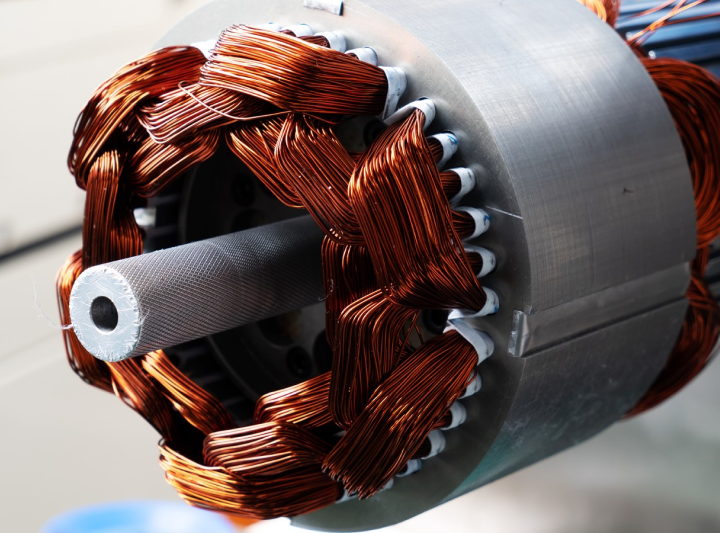
- You notice visible scorching on the windings during inspection.
- The motor runs hotter than it used to during normal use.
If the motor hums without turning, this is often a capacitor fault rather than a winding fault, and it is worth having both checked at the same time.
How a single phase motor works and why the windings fail
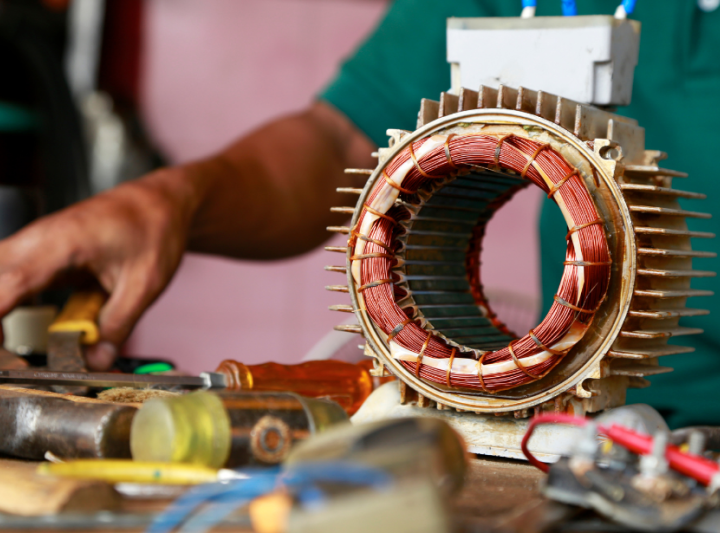
A single phase motor cannot create a rotating magnetic field from a single winding alone, which is why it needs a start winding and a run winding working together, along with a capacitor that shifts the phase of the current in the start winding. This phase shift is what gets the rotor turning from a standstill. Once the motor is up to speed, a centrifugal switch disconnects the start winding in many designs, and the motor continues running on the run winding alone.
Because the start and run windings are physically different in gauge and turns, a rewind has to reproduce both accurately. Winding failure in single phase motors is usually caused by the same underlying issues as other motor types, heat cycling that breaks down insulation over time, contamination in dusty or damp environments, or the motor being run beyond its duty cycle. A failing capacitor can also place extra strain on the start winding, which can accelerate winding failure if the capacitor issue is not caught early.
What rewinding a single phase motor actually involves
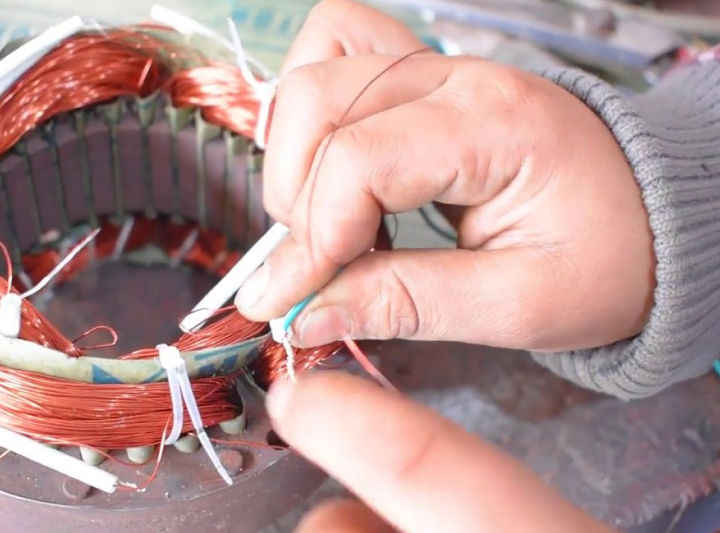
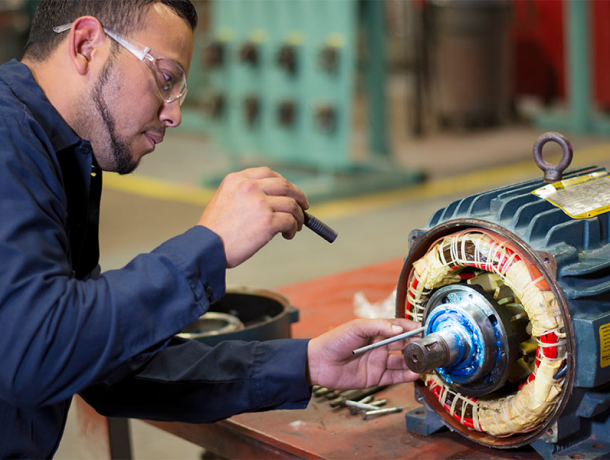
The stator is stripped of its old windings, cleaned, and checked for lamination damage in the same way as any other motor type. Because there are two distinct windings, the rewind has to match the original turns count and wire gauge separately for both the start winding and the run winding, since getting this wrong affects starting torque and running efficiency differently.
New wire is wound to specification, insulated, and the stator is then dipped or impregnated with varnish and cured in an oven to seal the windings in place. At this stage we also inspect the start capacitor and centrifugal switch mechanism where fitted, since these components commonly fail alongside or instead of the windings, and replacing a winding without addressing a failing capacitor often leads to the motor failing again soon after.
Once reassembled, the motor is run tested to confirm it starts reliably under load and runs at the correct speed and temperature.
Our rewinding and repair process
We keep the process straightforward so you know what is happening with your motor at every stage.
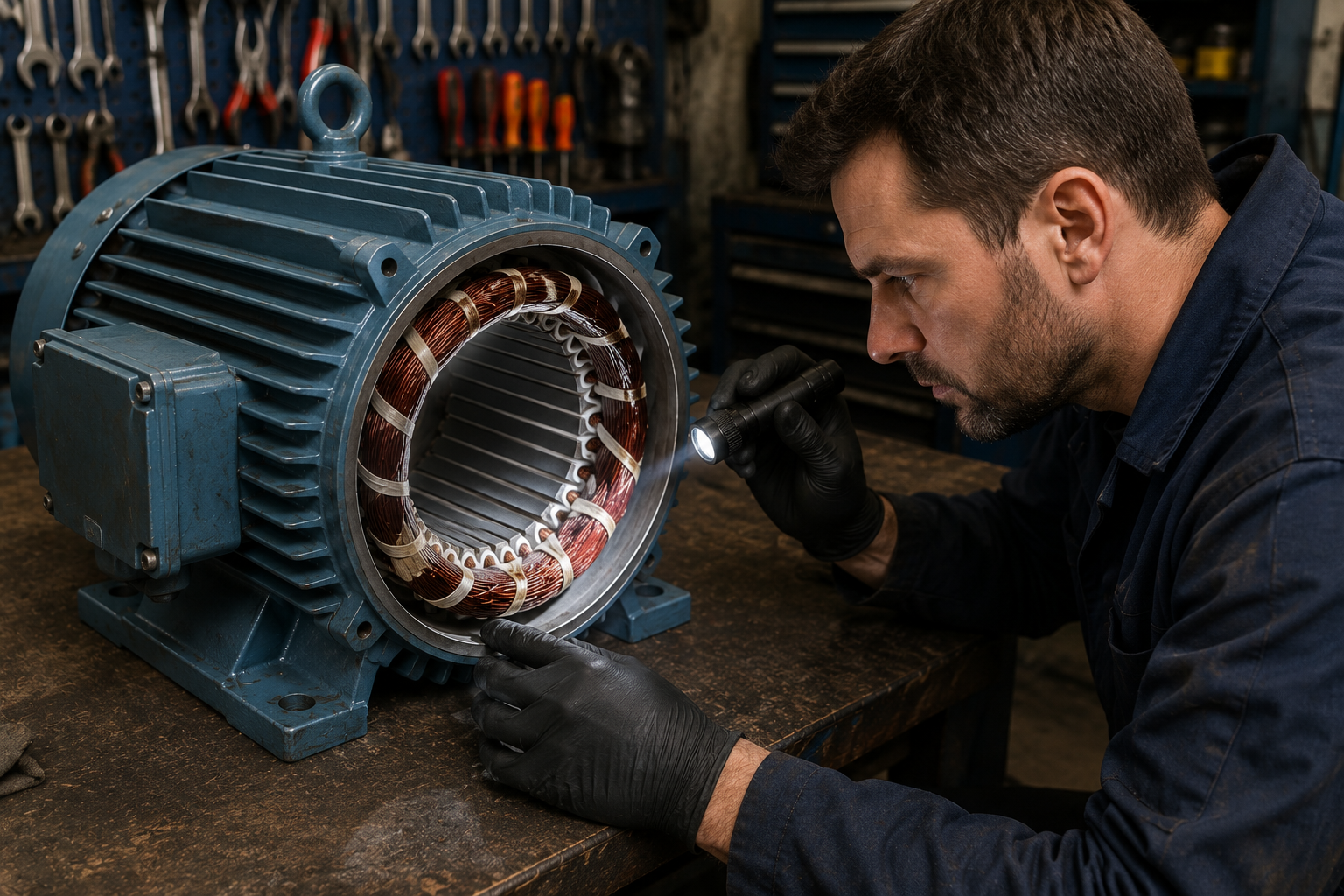
- Initial inspection of windings, capacitor, and centrifugal switch.
- Full strip down and testing of the stator.
- Rewinding of both start and run windings to specification.
- Insulation testing and varnish curing.
- Reassembly, capacitor check, and full load testing.
- Delivery or pickup coordination to suit your schedule.
Frequently Asked
Questions
Why does my single phase motor hum but not turn?
This is usually caused by a failed start capacitor or a fault in the start winding rather than a general winding failure. We check both when we inspect the motor.
Do you replace the capacitor as well as rewinding the motor?
Yes, we inspect the start capacitor and centrifugal switch during the assessment, since a failing capacitor is a common cause of repeat motor failure if left unaddressed.
How long does a single phase motor rewind take?
Most single phase motors are completed within a few working days depending on size and current workload. Contact us for a current estimate.
Can a single phase motor be rewound more than once?
In most cases yes, provided the stator core and laminations are still in good condition. We will let you know during inspection if the core itself is no longer viable.
Your Local Auckland Based Motor Rewinder
When rewinding an electric motor, it is important to find a reliable service provider in order to ensure proper maintenance and repair of the equipment. A reliable service provider will have experience in the field, offering quality workmanship and specialized services.
They should also be licensed and certified, so customers have the assurance that they are dealing with a professional who meets industry standards. Finding a reliable service provider can help prevent damage or loss of equipment, saving time and money in the long run.
We proudly serve Auckland and the surrounding regions, including North Shore, East Auckland, West Auckland, South Auckland and Central Auckland.